

Emotional Valence
- Home
- Emotional Valence
In emotional health, valence and arousal are like the X and Y axes of your feeling-world. Valence is how pleasant or unpleasant an emotion feels (positive vs. negative), and arousal is how activated or energized it is (high vs. low). Put together, they create a simple map: any emotional state you’re in can be described by how good or bad it feels and how revved up or calm your body is. Understanding this map helps you recognize that emotions aren’t just “good” or “bad”—they’re more like locations you move through, and different locations call for different kinds of care and response. Together, valence and arousal create a map of emotions that we can use to gauge what we are feeling.
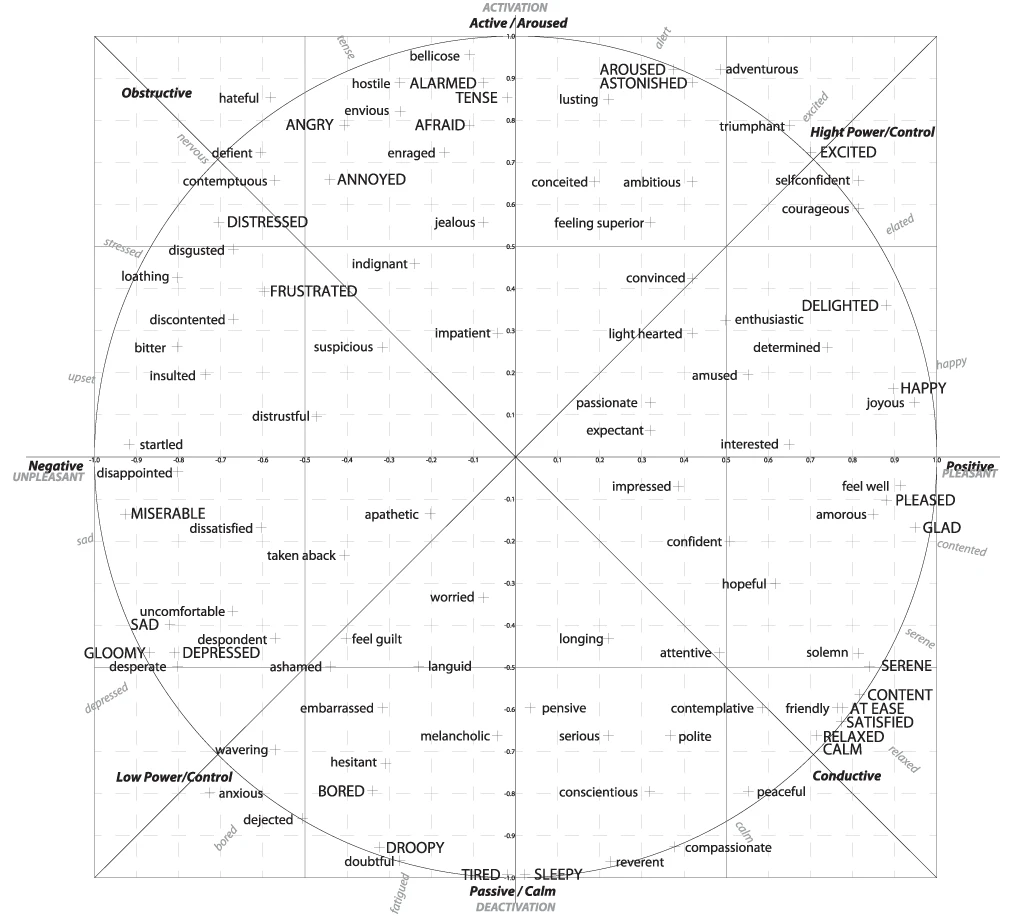
Pleasant / Unpleasant
Valence is the emotional “flavor.” Positive valence feels pleasant: joy, contentment, pride, amusement, relief. Negative valence feels unpleasant: sadness, anger, fear, shame, guilt, disgust. Many of us grow up thinking positive valence is “good” and negative valence is “bad,” but for emotional health, it’s more accurate to see valence as information. Unpleasant emotions are often signals: “something needs attention,” “a boundary is crossed,” “a value is threatened,” “a loss matters.” Pleasant emotions signal “this is good for me,” “this aligns with my values,” or “this is safe and rewarding.” Instead of trying to chase only pleasant valence and avoid all unpleasant valence, emotional health means learning to listen to both.
High / Low Energy
Arousal is about the intensity or energy level of your emotional state. High arousal emotions come with a revved-up body: racing heart, fast thoughts, muscle tension, urge to act. Examples: rage, panic, excitement, intense joy. Low arousal emotions are quieter and more settled in the body: slow, heavy, or flat. Examples: calm, contentment, sadness, fatigue. Neither high nor low arousal is inherently better; they simply fit different situations. High arousal can mobilize you to act (run, speak up, celebrate), while low arousal can support rest, reflection, and recovery.
Non-Verbal Expression
We also express emotions without saying a word. Tone of voice, facial expressions, posture, eye contact, pace of speech, and gestures all communicate what we feel. Slamming a door, going quiet, avoiding eye contact, hugging someone, or leaning in—all are forms of emotional expression. Emotional health includes noticing how you’re expressing feelings nonverbally and making adjustments when needed. For example: realizing your sarcasm hides vulnerability, or that your shut-down silence is actually sadness or fear that needs gentler expression.
Regulation, Not Suppression
Being “in control” of expression is often misunderstood as “don’t show anything.” In emotional health, control means regulation, not suppression. Suppression is shoving feelings down and pretending they’re not there—usually they leak out later as irritability, numbness, or sudden outbursts. Regulation means you’re aware of what you feel and can dial your expression up or down depending on what’s safe, wise, and helpful. You might take a breath before speaking, wait until you’re calmer, or choose softer words—but you don’t deny the emotion exists.
Expressing Difficult Emotions
Some emotions feel especially risky to express. Anger can feel dangerous, sadness can feel weak, fear can feel embarrassing, and shame often wants to hide. Healthy expression doesn’t mean you never feel these; it means you find ways to express them that don’t harm you or others. Anger can become a clear boundary: “I won’t be spoken to that way.” Sadness might show up as tears or “I’m grieving this loss.” Fear could sound like “I’m worried about what might happen.” Shame might be expressed as “I feel really exposed and afraid of being judged.” When hard emotions are expressed directly and respectfully, they tend to soften instead of harden.
Where And How We Share
Emotionally healthy expression is sensitive to context: who you’re with, where you are, and what’s happening. You don’t have to share everything with everyone. You might choose to be more contained at work and more open with close friends. You might say, “I’m too overwhelmed to talk right now; can we come back to this later?” That’s still expression—you’re honestly communicating your emotional capacity. Control means you can decide: this is something I can share now with this person; that is something I’ll process with a therapist, a journal, or on a walk.
Relationships
The way we express emotions directly affects the quality of our relationships. When you can calmly say, “I felt hurt,” instead of attacking or withdrawing, you give the relationship a chance to repair. When you share joy, enthusiasm, or appreciation freely, you deepen connection and trust. Healthy expression makes you easier to understand; people don’t have to guess what’s going on or walk on eggshells. It also makes you better at hearing others’ emotions without becoming defensive, because you’re more familiar with the language and texture of feelings.
Barriers
Many of us grew up with unspoken rules: “Don’t cry,” “Don’t be angry,” “Be nice,” “Don’t burden others,” or “We don’t talk about feelings.” These rules can create guilt or fear around emotional expression: you might feel wrong for crying, or ashamed when you raise your voice. Part of emotional health is gently noticing those old rules and asking, “Are they actually serving me now?” You can begin to replace them with more balanced guidelines, like “My feelings are valid, but I’m responsible for how I act on them,” or “It’s okay to ask for support.”
Healthy Practices
We don’t only express emotions in conversations. Movement, art, music, writing, and physical activity can all be powerful, safe outlets. Journaling a letter you never send, drawing what you feel, singing loudly in the car, going for a run to move anger or restlessness through your body—these are all forms of expression that help emotions flow instead of stagnate. Practicing simple scripts like “Right now I’m feeling…” or “Underneath my anger, I think I’m actually feeling…” can gradually open up more honest and skillful expression in your daily life.
When we have real control over how we express emotions, life feels more honest and more stable. We still experience the full range of feelings, but we’re less likely to explode, shut down, or say things we regret. Instead, we pause, sense what we feel, and choose how to show it. Conflicts become easier to navigate because we can talk about what’s happening inside without blaming or hiding. We set clearer boundaries, ask for what we need, and share affection and appreciation more freely. Relationships feel safer and more genuine, and inside ourselves there’s a growing confidence: “Whatever I feel, I can express it in a way that fits who I want to be.”
More Detail Improving Expression